Daniel Cormier on Why Wrestlers Skip MMA for Cash
This article was generated with AI assistance and reviewed by our editorial team.
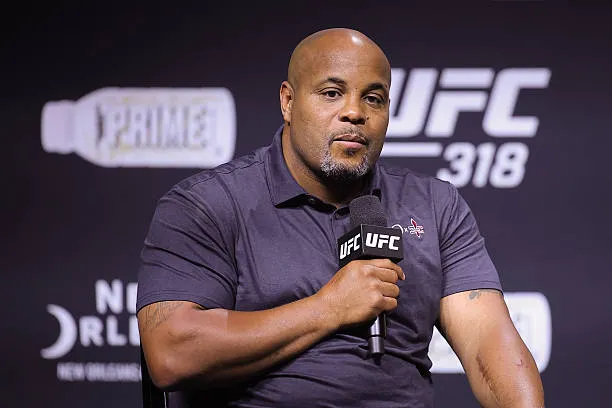
Daniel Cormier has a clear-eyed explanation for why the pipeline of elite American wrestlers into MMA has slowed to a trickle, and it has nothing to do with a lack of talent.
Why American Wrestlers Are Choosing Coaching Over the Cage
For decades, the UFC was the obvious next chapter for a dominant college wrestler. The skills transfer, the physical tools are already there, and the sport rewards exactly the kind of grinding, pressure-heavy style that wrestling builds. But the conveyor belt has stalled, and Cormier pointed to a simple reason: money is no longer on the MMA side of the equation.
Residence Training Centers, which support post-collegiate wrestlers chasing Olympic and world-level competition, now pay serious salaries. Cormier mentioned figures around $200, 000 a year for coaching roles, and for a wrestler who grew up in a college town like Stillwater, Oklahoma, or State College, Pennsylvania, that kind of income stretches a long way. The financial risk of taking punches while building an MMA record doesn't look nearly as attractive when a stable, well-paying job is sitting right there.
Cormier made the point from personal experience. He described staring at his own crossroads and wondering how many times he chose the harder road when a comfortable one was available. The difference now is that the comfortable road pays better than it used to.
What This Means for the UFC's Talent Pool
The timing matters. Gable Steveson, an Olympic gold medalist and one of the most decorated amateur wrestlers in recent memory, is making his UFC debut in July, which looks like an exception to the trend rather than a sign that the pipeline is reopening. Steveson's profile is rare, and his path to the UFC was built partly on celebrity and promotional appeal, not just competitive hunger.
Beyond Steveson, the cupboard looks sparse. Cormier noted the absence of an American male UFC champion right now, a striking gap given how dominant American wrestlers were in building the sport's early title lineage. Fighters like Cormier himself, Randy Couture, and Brock Lesnar all rode wrestling credentials to the top of the card. That era produced a specific kind of champion: physical, relentless, hard to finish. Fewer wrestlers entering the sport means fewer fighters with that profile moving up the rankings over the next five to ten years.
For MMA as a whole, this creates a gradual stylistic shift. More strikers and Brazilian jiu-jitsu specialists filling roster spots means fewer fights decided by top control and grinding decisions. That changes matchmaking math at every weight class.
Betting Angle
This trend has real implications for how bettors should evaluate American wrestlers who do make the leap to MMA. A fighter who walks away from a financially secure coaching or RTC path to compete is signaling genuine competitive drive, which tends to correlate with the kind of motivation that holds up under pressure. That psychological factor is often underpriced by the market.
In the near term, Gable Steveson's UFC debut is the fight to watch. Books will set lines based on his amateur credentials and physical tools, but his lack of professional experience creates genuine uncertainty. Expect him to open as a favorite depending on the opponent, but the line will likely tighten as sharp money accounts for the unknowns around his chin, gas tank, and ability to apply wrestling against trained MMA fighters.
More broadly, as the pool of elite American wrestlers entering MMA shrinks, the ones who do break through may carry inflated public perception. Bettors who understand the gap between wrestling pedigree and MMA readiness will find value fading overhyped prospects early in their careers.
Cormier's analysis is a reminder that combat sports talent development doesn't happen in a vacuum. Economic incentives shape who shows up, and right now the economics are pulling wrestlers away from the cage.
Frequently Asked Questions
Why are fewer American wrestlers transitioning to MMA?
Daniel Cormier says the main reason is money. Residence Training Centers and coaching roles now offer wrestlers salaries around $200,000 a year, making the financial risk of a fighting career much harder to justify.
Is Gable Steveson fighting in the UFC?
Yes, Olympic gold medalist Gable Steveson is scheduled to make his UFC debut in July 2026, though he represents an exception to the broader trend of top wrestlers bypassing MMA.
Does the decline in American wrestlers entering MMA affect UFC title pictures?
Cormier believes so. He pointed out the current absence of an American male UFC champion as a symptom of the shrinking wrestler pipeline, a notable shift given how central wrestling-based fighters were to building the sport's championship history.