Jack Dempsey vs. Billy Miske: The Blueprint That Worked
Jack Dempsey and Billy Miske fought to a no decision in 1918, a bout that revealed how to beat Dempsey's power before Tunney ever did.
This article was generated with AI assistance and reviewed by our editorial team.
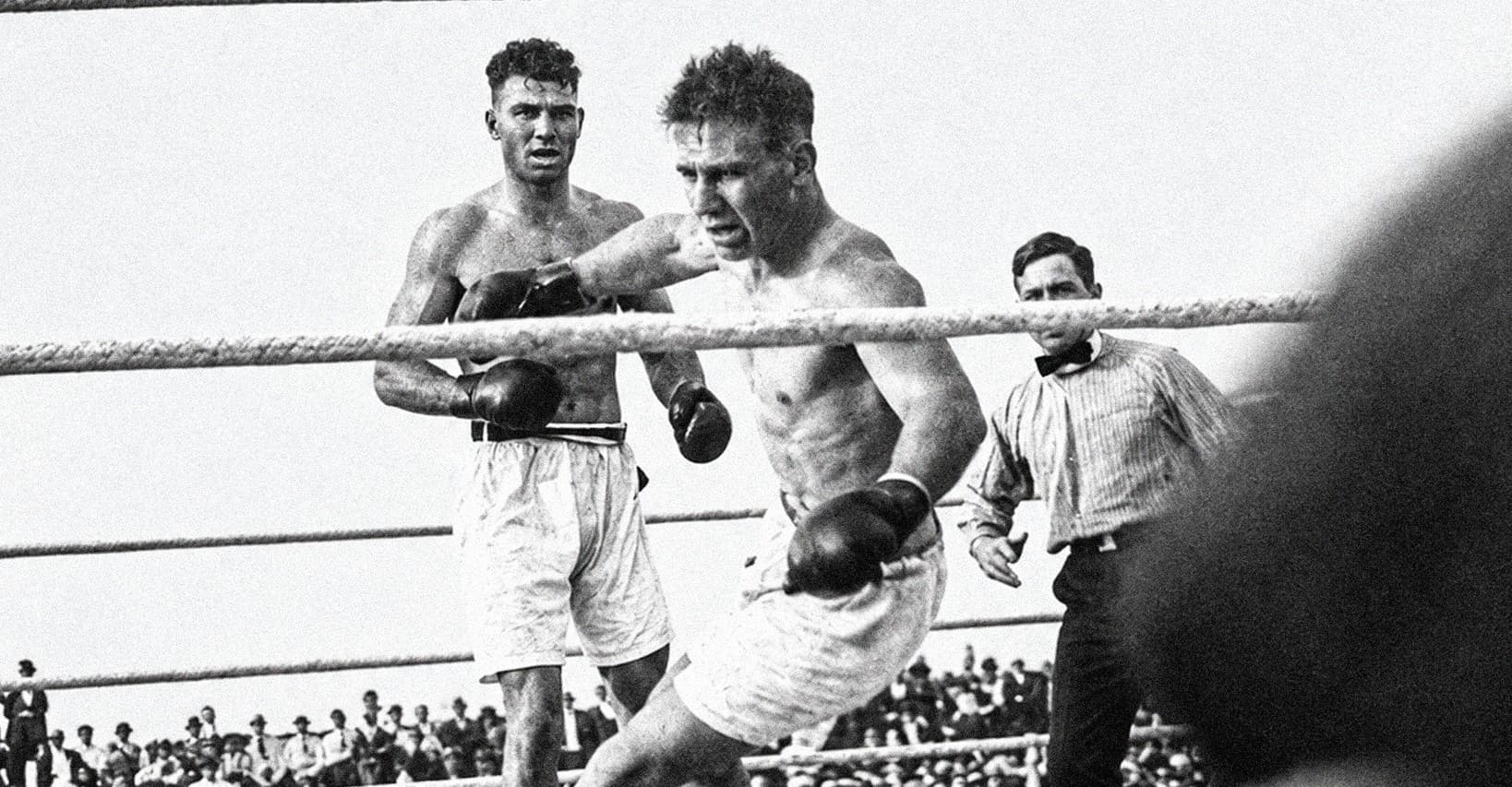
Jack Dempsey went the full 10 rounds without a decision against Billy Miske on May 3, 1918, in a St. Paul fight that later fighters would use as a blueprint against him. Under the no decision rules of the era, the bout produced no official winner, but newspapers at ringside were split on who did more damage, and the tape of that fight holds up today as the first real evidence that Dempsey could be solved.
Dempsey was 22 and already terrorizing the heavyweight division with a leaping left hook that would flatten Jess Willard for the title one year later. Miske, 24 and fighting in front of his own fans, was no soft touch. Known as the St. Paul Thunderbolt, he was a slick, close-range technician, and Dempsey came in at 187½ pounds to Miske's 182.
How Did Billy Miske Neutralize Dempsey's Left Hook?
Miske beat Dempsey's power by refusing to give it room to build. Dempsey's attack depended on rolling momentum, bobbing his shoulders, shifting his weight, and springing forward from odd angles to land the hook. Any opponent who backed up handed him the runway to do exactly that. Miske did the opposite. He stepped inside, got chest to chest, and turned the fight into a wrestling match at close range, jamming Dempsey's punching arm and answering with short shots before tying him up.
That approach paid off across the fight. Dempsey had good stretches in the second and third rounds, but Miske answered with a hard right cross in round three, and Dempsey himself later admitted Miske was outlanding him and even hurt him badly enough that he barely made it to the bell. Dempsey found his best form in the seventh, hurting Miske with a left to the body and a right to the jaw, but neither man ever scored a knockdown, which is why the writers covering it could not agree on a winner.
Why This Fight Matters More Than Its Record Shows
The St. Paul fight exposed a flaw in Dempsey that Jess Willard never figured out how to exploit. Willard tried to keep Dempsey at range in Toledo in 1919 but stood too tall and too still, and that stillness let Dempsey close distance and produce seven knockdowns in the opening round alone. Miske never gave Dempsey that gift. He moved toward the danger instead of away from it, shortening the punches and taking away the leverage Dempsey needed.
That same idea resurfaced years later when Gene Tunney beat Dempsey twice, in 1926 and again in 1927. Tunney leaned on footwork and a long jab rather than Miske's inside smothering, but the underlying principle was identical: never sit still at Dempsey's preferred range, and punish him the moment his forward rush turns predictable. Miske found that answer first, almost a decade before Tunney got credit for it.
For fight fans who study styles rather than just knockout reels, the Dempsey-Miske fight is a reminder that swarming inside on a puncher can be safer than boxing him from the outside, a lesson that still shows up in how trainers game-plan against heavy-handed knockout artists today.
Frequently Asked Questions
What was the result of the Jack Dempsey vs. Billy Miske fight?
The May 3, 1918 fight in St. Paul went the full 10 rounds and ended in a no decision, the standard outcome under the rules of that era when a bout went the distance without a knockdown.
How did Billy Miske manage to trouble Jack Dempsey?
Billy Miske fought Dempsey at close range instead of backing away, jamming his punching arm and smothering his hook before it could gather momentum, and even hurt Dempsey badly enough in one exchange that Dempsey later admitted he barely survived to the bell.
How does the Miske fight compare to how Gene Tunney beat Dempsey?
Gene Tunney beat Jack Dempsey in 1926 and 1927 using footwork and a long jab to stay off Dempsey's preferred punching range, a different method than Billy Miske's inside smothering, but both fighters shared the same core idea of never standing still in front of Dempsey's hook.