Toney-McCallum Scorecards Didn't Match the Fight
Toney-McCallum scorecards from their 1992 rematch didn't match how close the fight really was, despite Toney's win and title defense.
This article was generated with AI assistance and reviewed by our editorial team.
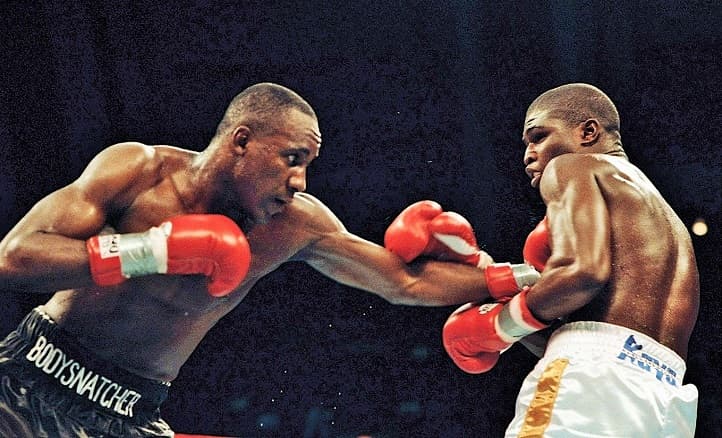
James Toney's majority decision win over Mike McCallum on August 29, 1992, kept his IBF middleweight title, but the lopsided scorecards badly undersold how competitive the fight actually was. Judges Doug Tucker and Tom McDonough scored it 117-110 for Toney, while Phil Newman had it dead even at 114-114, a split wide enough to raise real questions about how the rounds were watched.
What Happened Between Toney and McCallum in Reno
Toney and McCallum met in Reno in a rematch of a fight that had ended in a draw eight months earlier. At 35, McCallum still had enough left to make the younger champion work for every opening, leaning on his jab and body punching rather than trying to match Toney's hand speed. Working the body limited how often McCallum had to hunt for a head that kept sliding away from him, and his output forced Toney into stretches where he had to counter rather than dictate.
That approach came with real risk. Getting inside on Toney did not put McCallum out of range of the champion's short counters, and neither man could afford to treat close quarters as a place to coast. Toney's case for the wide cards rested on the sharper, more visible punches he landed in flurries, but McCallum kept piling up scoring shots in between those bursts, which is exactly the kind of output that can get lost on a scorecard built around highlight moments.
Do the Punch Stats Back Up a Wider Toney Win?
The punch totals suggest the fight was closer than two of the three cards indicated. McCallum landed 332 punches to Toney's 232, numbers that do not measure who won which round but do complicate any narrative that the champion boxed him up easily. A fighter can out-land his opponent over twelve rounds and still lose on cleaner shots, but a gap of 100 punches is hard to square with a seven-point spread on two of the cards.
Referee Joe Cortez took a point from McCallum in the eighth round for hitting behind Toney's back while holding him in a headlock. That deduction widened the final margin but did not decide the fight. Even without it, Toney is still ahead on both Tucker's and McDonough's cards, which means the real dispute isn't the penalty, it's how those two judges distributed the rounds in the first place.
Trainer Eddie Futch clearly didn't see a runaway fight from his corner. He told McCallum in the late rounds, "It's very close, Mike. You've got to get the next round," instructions that line up with a tight fight far more than with a 117-110 scorecard.
Betting Angle
For bettors looking back at this one, the lesson isn't about the result, Toney won and kept his belt, it's about how scorecards can distort a fighter's stock. A win that looks like a rout on paper can mask real vulnerabilities a fighter showed in the ring, and oddsmakers and bettors pricing a champion's next fight off a lopsided final score risk overrating how dominant that champion actually looked on fight night. McCallum's output here is a reminder that punch volume and competitiveness matter even when they don't show up in the final tally.
Frequently Asked Questions
Who won the James Toney vs. Mike McCallum rematch?
James Toney won by majority decision on August 29, 1992, in Reno, retaining his IBF middleweight title, with scores of 117-110, 117-110, and 114-114.
Why was a point deducted from Mike McCallum during the fight?
Referee Joe Cortez deducted a point from Mike McCallum in the eighth round for hitting James Toney behind the back while holding him in a headlock.
How did the punch statistics compare in the Toney-McCallum fight?
Mike McCallum landed 332 punches to James Toney's 232, a gap that suggests the fight was more competitive than two of the three scorecards reflected.