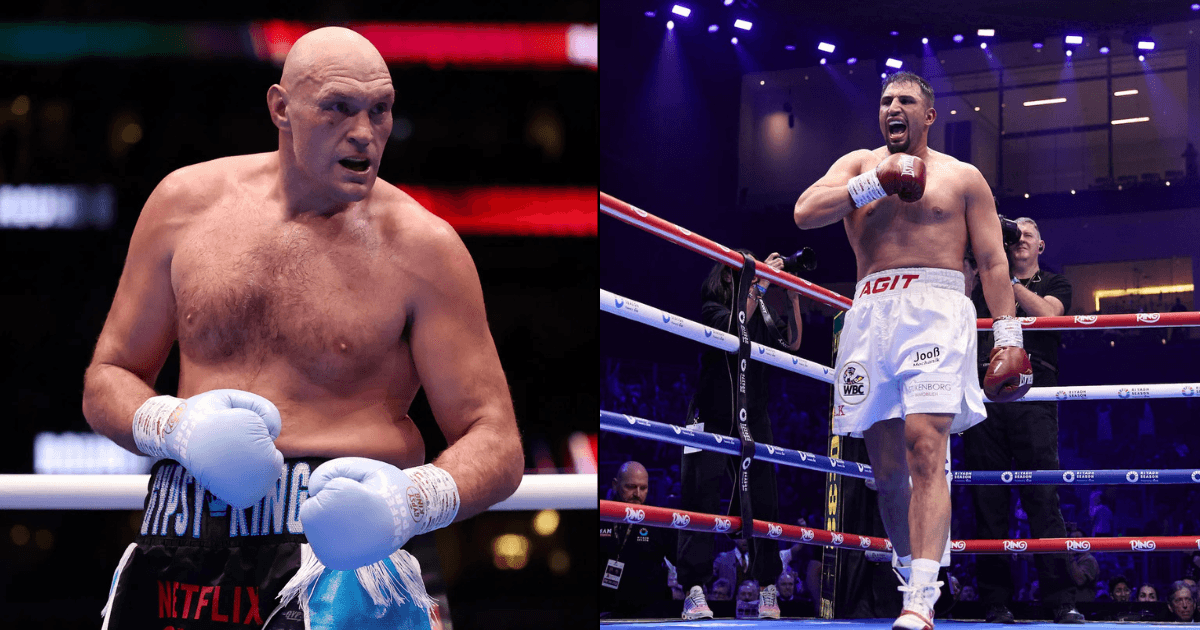
Tyson Fury's Manager: Saudi Boxing Money Has To Drop
Tyson Fury's manager Spencer Brown says Saudi boxing money must come down, predicting far fewer mega-money cards after Fury vs. Joshua.

This article was generated with AI assistance and reviewed by our editorial team.
Tyson Fury's manager Spencer Brown says Saudi Arabia's massive boxing purses are unsustainable and will shrink in the near future, even as the Kingdom stays involved in the sport. Brown, who helped broker Fury's December 11 fight against Anthony Joshua in Cardiff, told The Ariel Helwani Show that the current spending pace cannot continue and that fans should expect far fewer blockbuster Saudi-backed cards going forward.
"I think that the money has to go down because nobody can keep paying that sort of money," Brown said.
Brown was careful to separate his prediction from any claim that Saudi investment is disappearing. He expects Riyadh Season to keep backing fights, just at a much lower volume. He called the Fury-Joshua showdown one of the last events of its kind at that financial scale.
"I think this is one of the last of the big fights we're going to see. I think you might get one or two big fights a year in future," Brown said.
What A Saudi Pullback Means For Fighters
A drop in Saudi spending would force fighters who got used to eight and nine-figure purses to recalibrate or sit out. Brown's larger point is about psychology as much as economics. Once a boxer banks $10 million to $20 million for a mismatched fight with no real gate pressure, that number becomes an expectation rather than a bonus. Going back to purses tied to actual ticket sales and pay-per-view performance in markets like London, New York or Las Vegas will feel like a pay cut even when it reflects a fighter's true commercial value.
That sets up two likely groups. Star names with leverage may simply hold out, assuming Riyadh will come calling again or that their team isn't pushing hard enough, which risks burning months of prime fighting years waiting on a payday that may not return. Mid-tier fighters who were paid Saudi-level money just to fill out undercards face a blunter choice, since domestic promoters in Britain or the United States have little incentive to match those numbers if the fighter isn't moving tickets or subscriptions on their own.
Betting Angle
For bettors, a slower Saudi calendar means fewer of the lopsided, heavily-hyped mismatches that have populated recent cards, and potentially a return to fights built on competitive logic rather than available budget. If promoters go back to pairing fighters based on domestic drawing power and world rankings rather than who Riyadh Season is willing to overpay, expect tighter lines and fewer heavy favorites padded by one-sided styles or mismatched levels of experience. Fighters sitting out in hopes of another mega-money call could also see extended layoffs factor into odds once they do return, since ring rust and age become live questions for bettors pricing comeback fights. None of this changes the betting picture for Fury-Joshua itself, which Brown frames as one of the last fights of its current scale rather than part of a new, cheaper era.
Brown's comments carry weight given his direct role in negotiating major Saudi-backed fights, including Fury vs. Joshua, even though he was speaking as a manager and dealmaker rather than on behalf of Riyadh Season itself.
Frequently Asked Questions
What did Tyson Fury's manager say about Saudi boxing money?
Spencer Brown, Tyson Fury's manager, said Saudi Arabia's massive boxing purses cannot continue at their current pace and predicted only one or two mega-money fights per year going forward, rather than Saudi investment disappearing entirely.
Is Saudi Arabia pulling out of boxing?
No. Spencer Brown said Saudi Arabia's Riyadh Season will continue backing boxing events, but at a much lower volume of blockbuster cards than fans have seen in recent years.
How does this relate to Tyson Fury vs. Anthony Joshua?
Spencer Brown, who helped arrange the December 11 fight between Tyson Fury and Anthony Joshua in Cardiff, called it one of the last fights of its scale before Saudi-backed purses are expected to shrink.